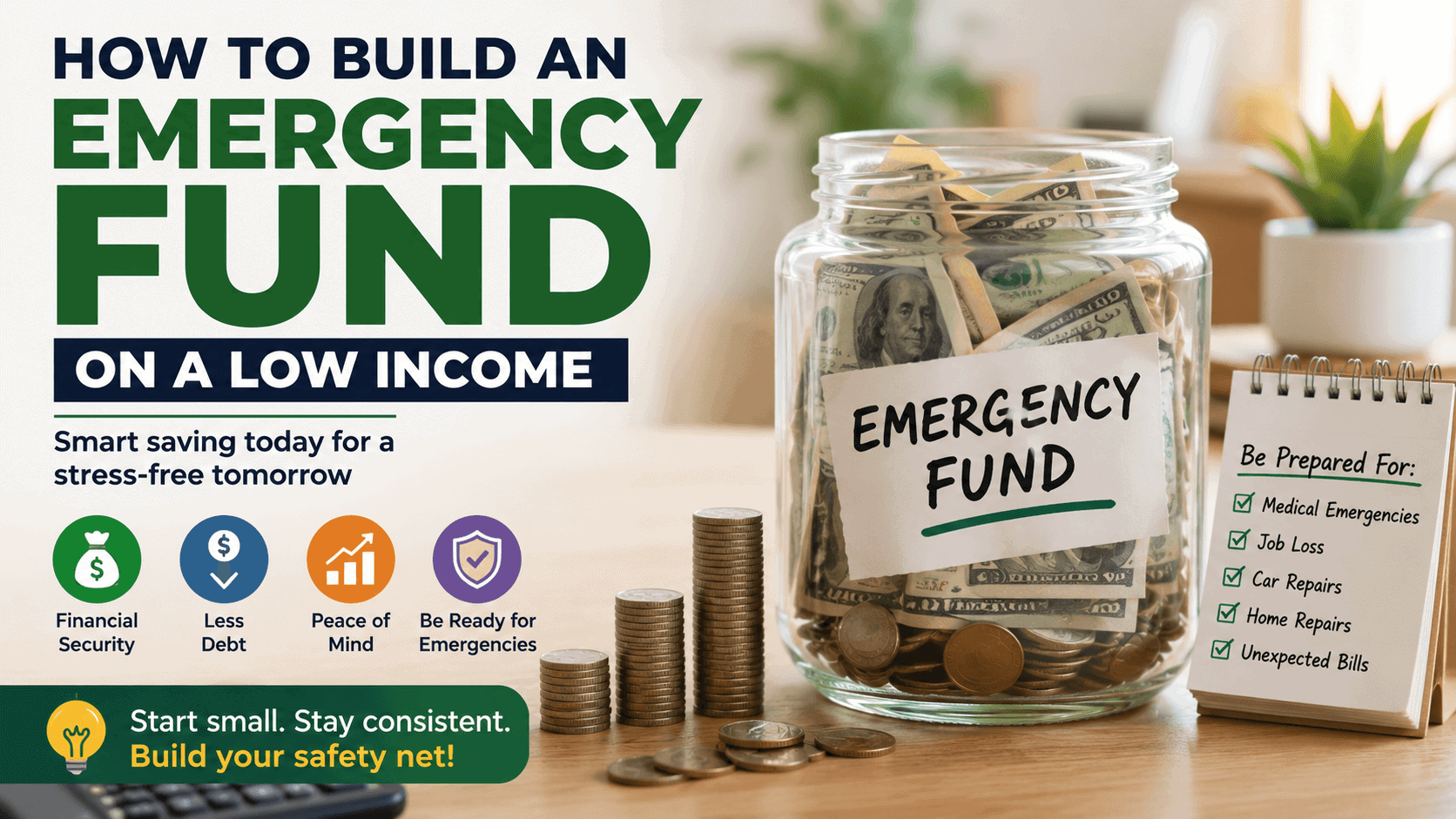
How to Build an Emergency Fund on a Low Income: Life is full of surprises. Sometimes those surprises are good, but sometimes they can create financial problems. A sudden medical bill, car repair, job loss, or home emergency can put a lot of pressure on your finances.
This is why having an emergency fund is important.
Many people believe they need a high income to save money, but that is not true. Even if you earn a small salary, you can still build a strong emergency fund over time.
In this guide, you will learn how to build an emergency fund on a low income, why it matters, how much money you should save, and practical steps that can help you start today.
What Is an Emergency Fund?
An emergency fund is money that you set aside for unexpected expenses.
This money is not for shopping, vacations, or entertainment. It is only for real emergencies such as:
- Medical expenses
- Job loss
- Car repairs
- Home repairs
- Family emergencies
- Unexpected bills
Think of an emergency fund as a financial safety net. It helps you handle difficult situations without relying on credit cards or loans.
Why Is an Emergency Fund Important?
Many people live paycheck to paycheck. When an unexpected expense appears, they often borrow money or use credit cards.
An emergency fund helps you avoid this problem.
Financial Security
Knowing that you have money saved for emergencies can reduce stress and anxiety.
Less Debt
Instead of borrowing money, you can use your emergency savings.
Better Financial Decisions
When you have savings, you are less likely to make rushed financial choices.
Protection During Job Loss
An emergency fund can help cover essential expenses if you lose your job.
Can You Build an Emergency Fund on a Low Income?
Yes, absolutely.
Many people think saving money is only possible for high earners. In reality, successful saving is more about habits than income.
Even saving a small amount every week can make a difference over time.
The key is consistency.
Saving $10 every week for one year is much better than planning to save $500 someday and never starting.
How Much Should You Save in an Emergency Fund?
Financial experts often recommend saving three to six months of living expenses.
For example:
- Monthly expenses: $500
- Emergency fund goal: $1,500 to $3,000
If that amount sounds overwhelming, do not worry.
Start with a smaller goal.
First Goal: $100
Your first milestone should be saving your first $100.
Second Goal: $500
Once you reach $100, work toward $500.
Third Goal: $1,000
A $1,000 emergency fund can cover many common unexpected expenses.
After reaching these milestones, continue building toward three to six months of expenses.
Step 1: Understand Your Monthly Expenses
Before saving money, you need to know where your money goes.
Write down all your monthly expenses:
- Rent
- Utilities
- Groceries
- Transportation
- Insurance
- Phone bills
- Other essential expenses
Tracking your spending helps you identify areas where you can save money.
Step 2: Create a Simple Budget
A budget helps you control your money.
One simple budgeting method is the 50/30/20 rule:
- 50% for needs
- 30% for wants
- 20% for savings and goals
If your income is very limited, start with whatever amount you can save consistently.
Even 5% of your income is a good start.
Step 3: Open a Separate Savings Account
Keeping your emergency fund separate from your everyday spending account makes it easier to avoid temptation.
A dedicated savings account can help you stay focused on your goal.
Step 4: Save Small Amounts Regularly
You do not need to save large amounts.
Try:
- $1 per day
- $5 per week
- $20 per month
Small savings add up over time.
Consistency matters more than the amount.
Step 5: Cut Unnecessary Expenses
Review your spending habits.
You may find areas where you can save money without affecting your quality of life.
Examples include:
- Unused subscriptions
- Impulse purchases
- Frequent takeout meals
- Expensive entertainment
Redirect those savings to your emergency fund.
Step 6: Use Extra Income Wisely
Whenever you receive extra money, consider saving part of it.
Examples include:
- Tax refunds
- Bonuses
- Gifts
- Freelance income
- Side hustle earnings
Adding unexpected income to your emergency fund can help you reach your goal faster.
Step 7: Automate Your Savings
Automatic transfers can make saving easier.
Schedule a transfer from your checking account to your savings account each payday.
This removes the temptation to spend the money first.
Common Mistakes to Avoid
Waiting for the Perfect Time
Many people delay saving because they think they will start when they earn more money.
The best time to start is now.
Using Emergency Savings for Non-Emergencies
Your emergency fund should only be used for genuine emergencies.
Giving Up Too Early
Building an emergency fund takes time.
Stay patient and focus on steady progress.
Benefits of Having an Emergency Fund
- Reduced financial stress
- Better money management
- Less reliance on debt
- Increased confidence
- Improved financial stability
Read More-
What is an Education Loan? Benefits and Types 2026
What is Insurance?: Types, Benefits and Choosing the Right Policy 2026
How much should I save each month?
Save whatever amount you can consistently afford. Consistency is more important than the size of the contribution.
Where should I keep my emergency fund?
A separate savings account is often a practical option because it keeps your money accessible while reducing the temptation to spend it.
Can I start with a very small amount?
Yes. Even small savings can grow into a meaningful emergency fund over time.
How long does it take to build an emergency fund?
The timeline depends on your income, expenses, and savings rate. The important thing is to start and stay consistent.
Conclusion
Learning how to build an emergency fund on a low income is one of the smartest financial decisions you can make. You do not need a large salary to begin. What matters most is developing the habit of saving regularly and staying committed to your goal.
Start small, stay consistent, and remember that every dollar saved brings you closer to financial security. Over time, your emergency fund can help protect you from unexpected expenses and give you greater peace of mind.